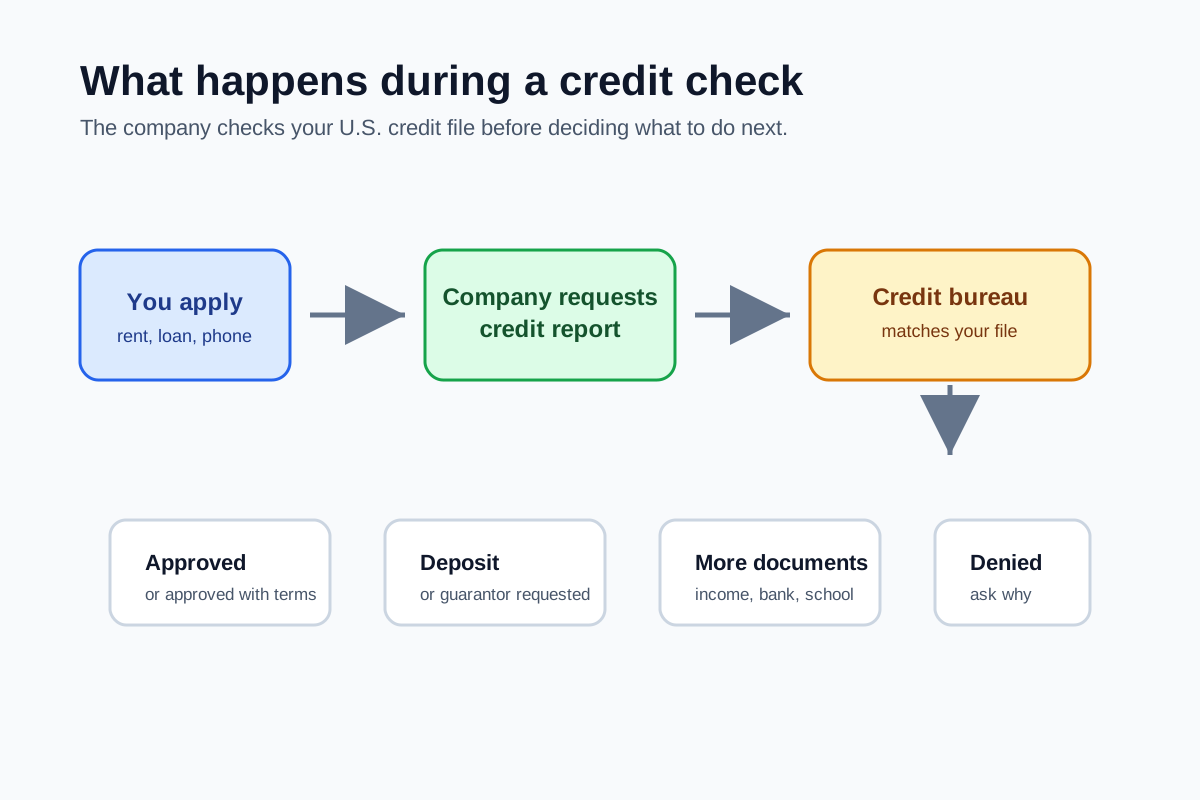
A credit check is when a company reviews your U.S. credit report or credit history before deciding whether to approve you, what deposit to charge, or what terms to offer. If you are new to the United States, the result may show little or no credit history. That does not mean you did something wrong.
Key points
- A credit check is a request to review information in your U.S. credit report.
- Companies may use credit checks for apartments, credit cards, car loans, utilities, phone plans, and some insurance or employment screening.
- A hard credit check can affect your credit score. A soft check usually does not.
- You may fail a credit check because the credit bureaus do not have enough U.S. history yet.
- Do not keep applying everywhere after denials. Ask what alternative documents or deposits are accepted.
- Only give your SSN or personal information when the request is legitimate and necessary.
What A Credit Check Means
A credit check means someone is trying to look at your credit report or credit-related information. The Consumer Financial Protection Bureau explains credit inquiries as requests to look at your credit report for eligibility decisions such as credit, housing, employment, insurance, or another permitted purpose.
The company may be checking:
- Whether you have a credit file.
- Whether you have paid accounts on time.
- How much debt you already have.
- Whether you have collections, defaults, or other negative records.
- Whether your identity information matches credit bureau records.
A credit check is not the same as a background check, immigration check, or bank balance check. Some applications use several checks at once, so ask which check the company is running.
Hard Checks Vs. Soft Checks
Credit checks often fall into two groups.
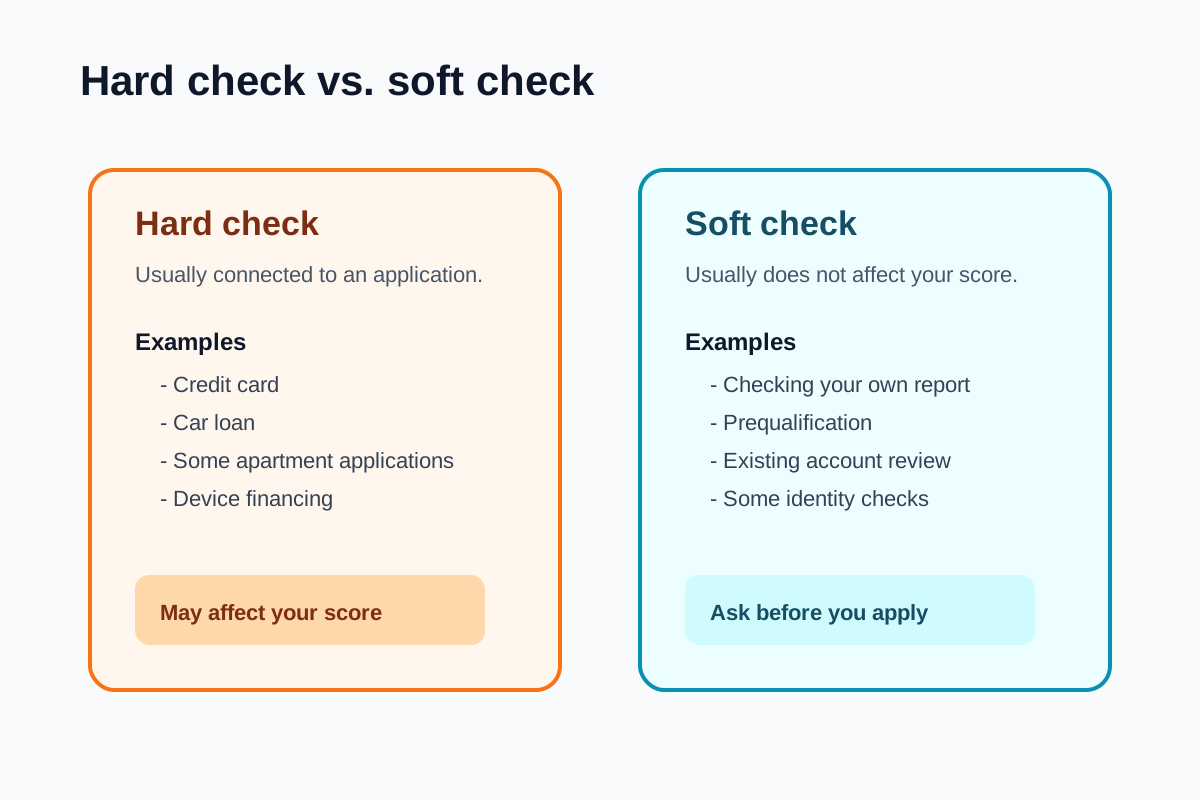
| Type | What it usually means | Common examples |
|---|---|---|
| Hard credit check | A lender or company checks your report because you applied for credit or a financial account. It may affect your score. | Credit card, car loan, personal loan, some apartment or phone applications |
| Soft credit check | A check that usually does not affect your score and may only be visible to you. | Checking your own report, prequalification, account review by an existing lender |
Before applying, ask: "Will this be a hard credit check?" That question is normal in the U.S.
Where Credit Checks Are Used
Credit checks show up in many everyday systems.
Renting An Apartment
Landlords or property managers may check credit before approving a lease. If you have no U.S. credit history, they may ask for proof of income, bank statements, an offer letter, a larger deposit where legal, a co-signer, or a guarantor.
Credit Cards
Card issuers usually check credit when you apply. If you have no U.S. credit file, a regular card may be denied even if you have money in the bank. A secured credit card, student card, or newcomer-friendly bank may be a better first step.
Car Loans And Leases
Auto lenders use credit checks to decide approval, interest rate, down payment, and loan terms. No credit history can mean a higher interest rate or a request for a larger down payment.
Phone Plans, Utilities, And Internet
Some postpaid phone, electricity, gas, or internet accounts may check credit or require a deposit. Prepaid phone service often avoids credit checks and can be easier during the first weeks.
Insurance And Employment Screening
Some insurers or employers may use credit-related information where allowed by law. Rules vary by state and by purpose. Employment screening should involve notice and permission.
When A Credit Check Is Appropriate
A credit check is usually appropriate when you are applying for something that involves trust, monthly billing, borrowing, or a long-term contract.
Before you agree to a credit check
0 of 6 done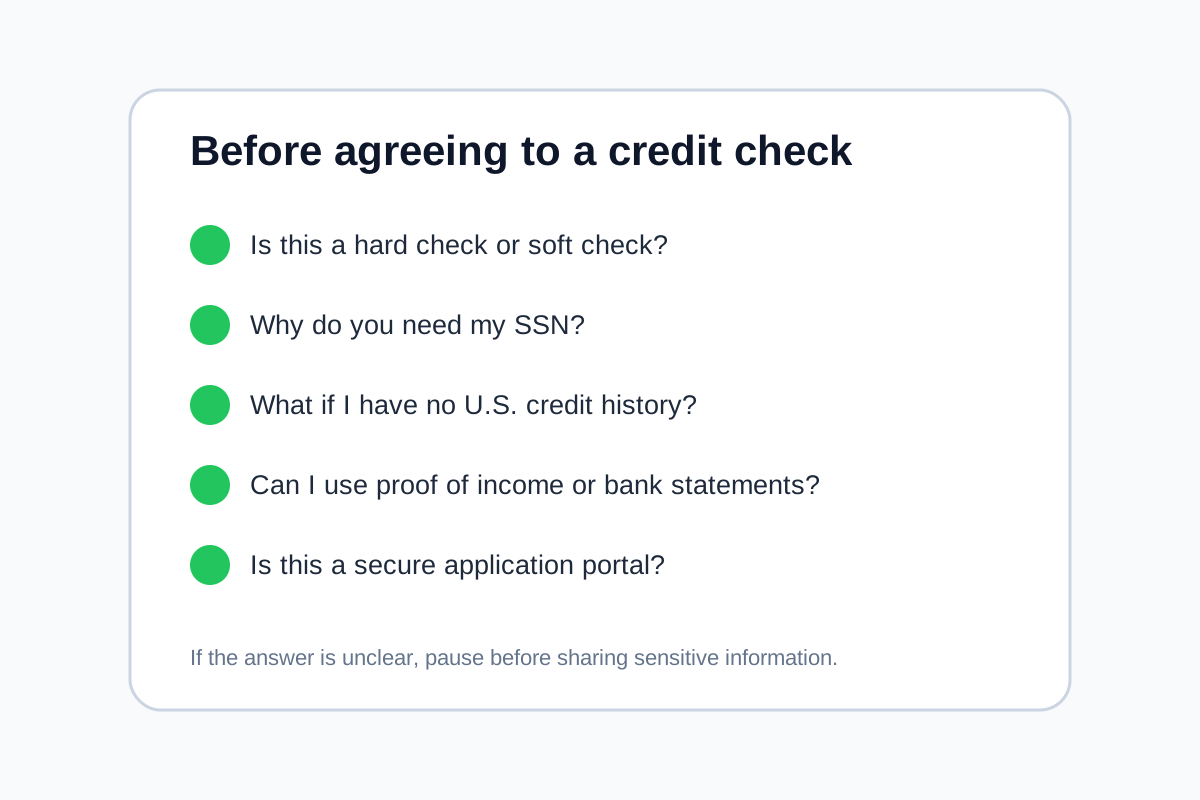
Why A Credit Check May Fail
You may receive an SSN before the credit bureaus have any useful credit history attached to it. Your SSN may be valid, but your credit file may still be missing, thin, or hard to match.
This can happen because:
- You have not opened any U.S. credit accounts yet.
- Your first account has not reported to the credit bureaus yet.
- Your name, address, date of birth, or SSN is entered differently across applications.
- You recently received an SSN and the bureaus have not built a file.
- The company uses an automated system that cannot handle a thin file.
No credit history is different from bad credit. Bad credit means the report shows problems. No credit means there may not be enough information yet.
What To Do If You Have No Credit File
Start with the practical route, not the most prestigious product.
- Ask the company why the application failed.
- Read any adverse action notice or denial reason. If the decision used a credit report, the notice should name the credit reporting company and explain your right to request a free report from that company within 60 days.
- Request that free report from the credit reporting company named in the notice. This is separate from your regular free reports at AnnualCreditReport.com.
- If the report has wrong information, dispute it with the credit reporting company and with the company that provided the information. Keep copies of the report, notice, dispute, and supporting documents.
- Check whether the landlord, lender, utility, phone company, or card issuer accepts alternative documents.
- Avoid repeated applications in a short period.
- Start building credit with one low-fee product that reports to the credit bureaus.
Common Mistakes
Decision Rules
| Situation | Practical rule |
|---|---|
| You are applying for a credit card or loan | Expect a credit check. Ask whether prequalification is available first. |
| You are renting with no U.S. credit history | Prepare proof of income, bank statements, school or job documents, references, and guarantor options. |
| You need phone service immediately | Start with prepaid if postpaid service requires credit history or a deposit you do not want to pay. |
| You were denied because there is no file | Read the adverse action notice, request any free report named in it within 60 days, then use alternative documentation and one credit-building product. |
| You do not trust the person asking for your SSN | Stop and verify the company, website, phone number, and application process independently. |
What To Do Next
- Learn the basics in What Is a Credit Score?.
- Read How to Protect Your Personal Information before sharing your SSN widely.
- If you are preparing to rent, gather proof of income, address history, bank statements, school or job letters, and references before applying.
Sources
This guide uses official or primary sources for rules and government steps. Local rules may still vary. (Last checked: September 13, 2026)
- CFPB What's a Credit Inquiry?
- AnnualCreditReport.com
- CFPB: What can I do if my credit application was denied because of my credit report?
- CFPB: How do I dispute an error on my credit report?