When you move into assigned housing, a dorm, apartment, room, or temporary stay, your first goal is not to make the place perfect. Your first goal is to sleep, shower, eat simple food, charge your devices, do laundry, and keep the space clean enough to function.
Key points
- First buy what lets you sleep: pillow, sheets, blanket, towel, and basic toiletries.
- Then buy simple food and kitchen basics: plate, bowl, cup, utensils, sponge, dish soap, and a few groceries.
- Check what your housing already provides before spending money.
- For bulky items like bedding, pillows, laundry baskets, or large grocery trips, public transit can be awkward.
- Consider rideshare, taxi, delivery, store pickup, or help from a roommate, campus group, or friend.
- Buy the minimum first. You can upgrade after you know the room, storage, roommates, laundry, and kitchen rules.
Who This Guide Is For
Use this guide if you have just received or entered housing in the U.S. It fits dorm rooms, furnished rooms, assigned university housing, employer housing, shared apartments, temporary rentals, and unfurnished apartments.
For the broader first-week order, read First Week Checklist.
If you have not chosen a place to stay yet, start with Finding Temporary Housing.
Check The Room Before Buying
Before going shopping, inspect what you already have.
Check before you shop
0 of 8 doneSleep And Bedding Essentials
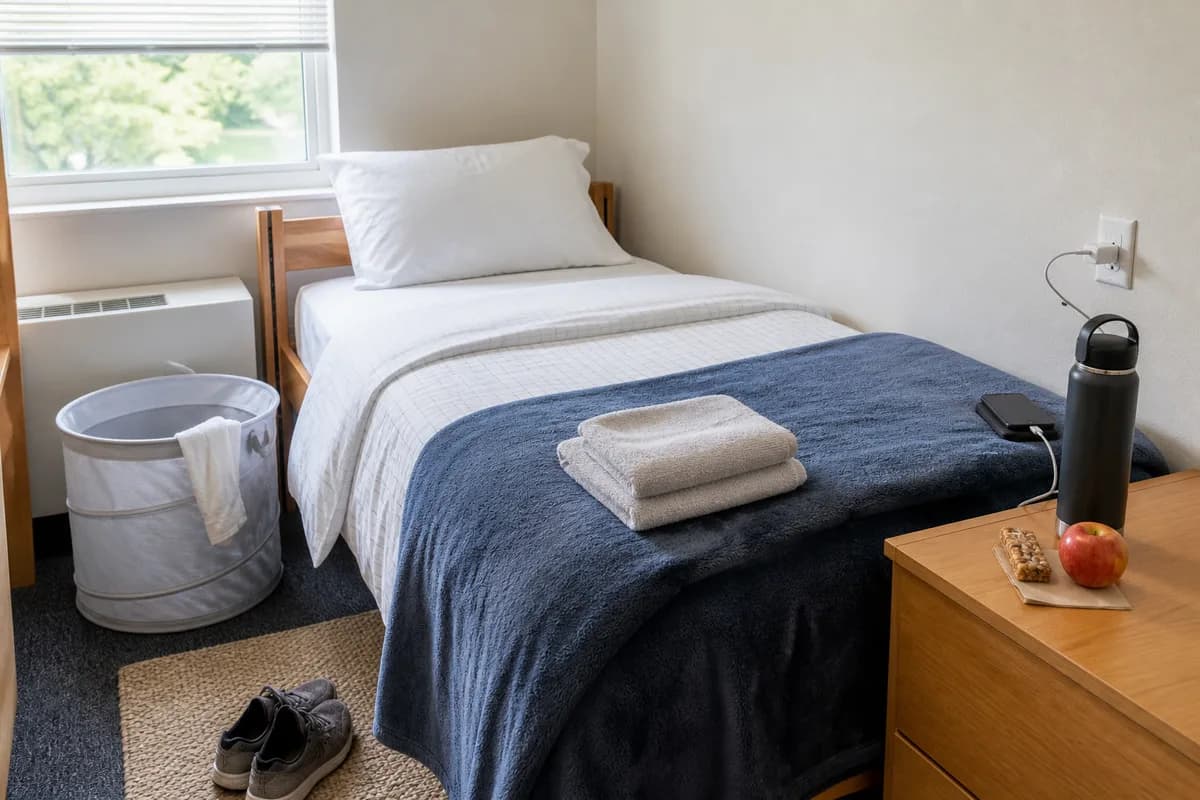
Prioritize sleep first. You can live without decorations. You cannot function well without basic bedding.
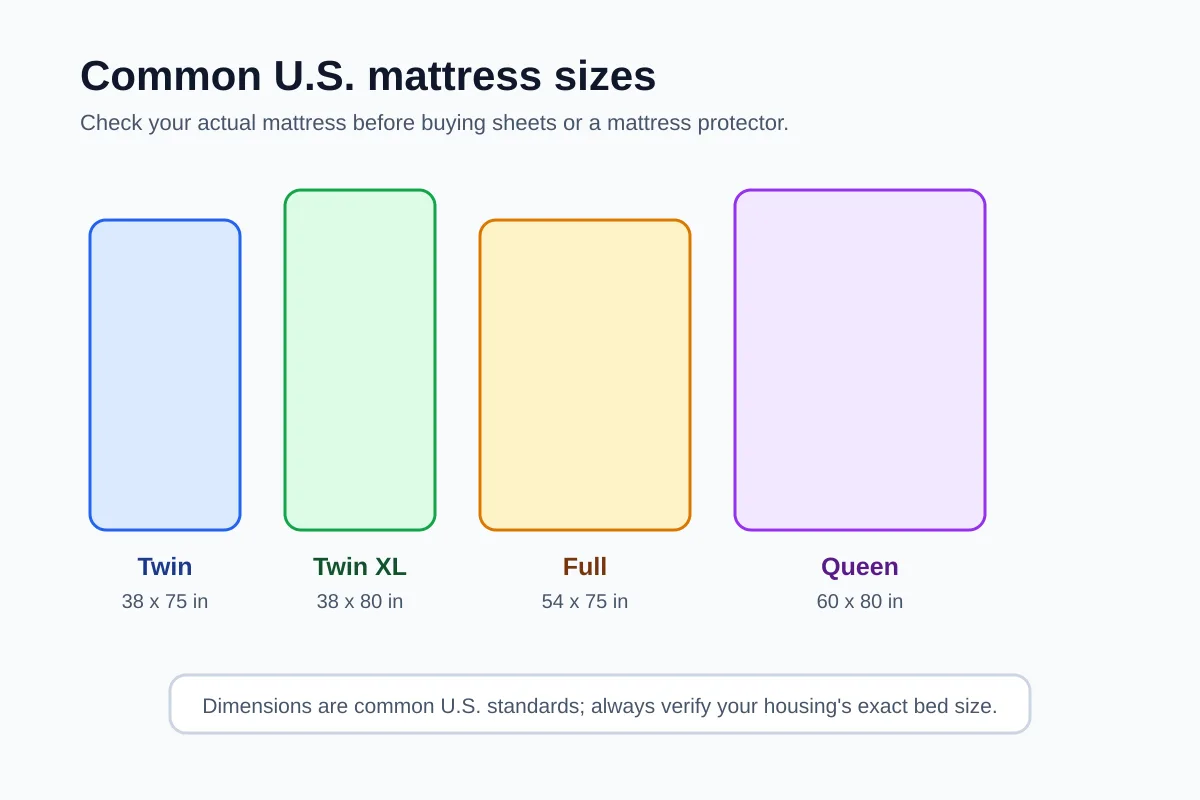
Buy or confirm:
- Pillow.
- Pillowcase.
- Fitted sheet.
- Flat sheet if you use one.
- Blanket, comforter, or duvet.
- Mattress protector if the mattress is used or required by housing.
- Towel and washcloth.
- Pajamas or comfortable sleep clothes if packed luggage is delayed.
If your budget is tight, start with one pillow, one sheet set, one blanket, and one towel. Buy extras later.
Bathroom And Toiletries
Buy enough for the first few days:
- Toilet paper.
- Soap or body wash.
- Shampoo and conditioner.
- Toothbrush and toothpaste.
- Deodorant.
- Shower shoes or flip-flops if using shared bathrooms.
- Laundry bag or basket.
- Small trash bags.
- Basic medication or personal care items you already know you use.
If you share a bathroom, ask how storage works before leaving expensive items there.
Food Basics
You do not need a full kitchen setup on day one. Start with simple food that does not require much equipment.
First groceries can include:
- Water or a refillable bottle.
- Bread, tortillas, rice, pasta, or instant noodles.
- Eggs, yogurt, cheese, beans, tuna, peanut butter, hummus, or another easy protein.
- Fruit.
- Frozen vegetables or salad kit.
- Snacks for late arrival.
- Tea, coffee, or breakfast food if you need it.
Check whether your room has a fridge, microwave, stove, or shared kitchen before buying food that needs cooking.
Basic Kitchen Items
Start small. Many shared homes already have some kitchen items, and roommates may not want duplicates everywhere.
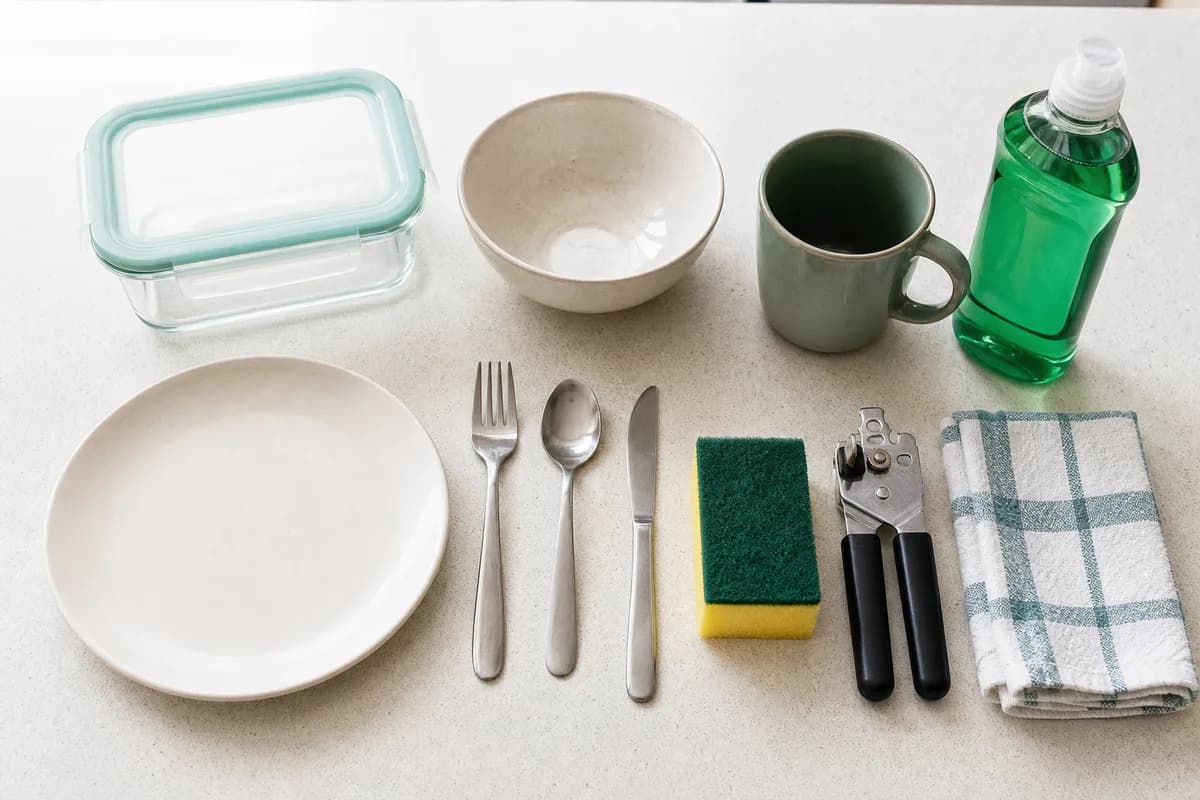
Buy or borrow:
- Plate.
- Bowl.
- Cup or mug.
- Fork, spoon, and knife.
- Can opener.
- Sponge or dish brush.
- Dish soap.
- Small cutting board.
- Basic kitchen knife if allowed and needed.
- Food storage container or zip bags.
- Paper towels or reusable cloth.
If you will cook regularly, add a pan, pot, spatula, cooking oil, salt, pepper, and a few simple spices later.
Cleaning And Laundry
You need enough to keep the room usable and avoid problems with roommates, landlords, or housing staff.
Basic supplies:
- Trash bags.
- All-purpose cleaner.
- Disinfecting wipes or spray if preferred.
- Paper towels or cleaning cloths.
- Laundry detergent.
- Laundry basket or bag.
- Hangers.
- Broom, dustpan, or small vacuum if not provided.
Ask before buying large shared items. In shared housing, roommates may already have a vacuum, mop, trash can, or kitchen supplies.
Where To Buy Move-In Basics
Store availability depends on your city. Check nearby locations and delivery options before you travel with bulky items.
Common options:
- Target: bedding, towels, toiletries, kitchen basics, cleaning supplies, groceries in many locations.
- Walmart: bedding, low-cost household basics, groceries, toiletries, cleaning supplies, pickup, and delivery in many areas.
- IKEA: furniture, bedding, kitchen items, storage, desks, chairs, and apartment basics where stores or delivery are available.
- Dollar Tree: low-cost basics such as some kitchen items, cleaning supplies, toiletries, and small household goods.
- Grocery stores, pharmacies, campus stores, local discount stores, thrift stores, Facebook Marketplace, Buy Nothing groups, and university swap groups.
Transportation For Bulky Shopping
Buying bedding, pillows, blankets, kitchen supplies, and groceries can be harder than the shopping itself. Large bags are awkward on buses and trains, especially with transfers, stairs, bad weather, or a long walk from the stop.
Before shopping, decide how you will get everything home:
- Use public transit only if the trip is simple and you can carry everything safely.
- Use rideshare or taxi for bulky first-day shopping if it fits your budget.
- Ask a roommate, classmate, campus group, host, or coworker whether they are doing a store trip.
- Use store delivery or pickup when available.
- Split shopping into two trips: sleep/bathroom first, kitchen/decor later.
For route and ride options, read Getting Around After Arrival. If you need occasional access to a car, read Car Sharing and Rental Cars.
What Can Wait
Do not pressure yourself to fully furnish the room immediately.
Usually can wait:
- Decorations.
- Extra bedding sets.
- Full cookware set.
- Desk lamp if the room lighting is enough for the first night.
- Storage bins before you know closet space.
- Large furniture.
- TV, speakers, gaming setup, or other nonessential electronics.
- Bulk groceries before you know storage and cooking rules.
Common Mistakes
Move-In Checklist
First shopping trip
0 of 13 doneWhat To Do Next
- Confirm bed size and what the room already includes.
- Buy sleep, bathroom, and simple food basics first.
- Plan how to transport bulky items before shopping.
- Ask roommates or housing staff about shared items, laundry, trash, mail, and kitchen rules.
- Wait a few days before buying storage, furniture, decorations, or duplicates.
- Update USCIS when required, set up USPS forwarding if needed, and change school, employer, DMV, bank, insurance, and utility records separately. Use USCIS Address Change Versus USPS Forwarding.
Related Guides
- Furnishing Your First Apartment on a Budget
- Buying Used Furniture Safely
- Setting Up Electricity
- Setting Up Home Internet
- Utilities Explained
- USCIS Address Change Versus USPS Forwarding
- How to Use a Laundromat