A U.S. bank account makes everyday life easier. Once you choose an account, the next job is practical: confirm the documents, apply, fund the account, activate the debit card, set up direct deposit, and protect your login.
Key points
- Open a simple checking account first. It covers your debit card, rent, bills, and direct deposit.
- No SSN yet? Many banks will open an account with a passport plus an immigration document, or an ITIN. Ask each bank before you visit because requirements differ.
- Apply online if your documents are standard. Go to a branch if your situation needs explanation.
- The day the account opens: activate the debit card, turn on alerts and two-factor authentication, and save your routing and account numbers for payroll.
- Read the fee schedule before touching overdraft, wires, out-of-network ATMs, or international transfers.
Who This Guide Is For
Use this guide if you recently arrived in the United States, already have an account in mind, and need the practical opening steps. It is especially useful if you need to receive salary, pay rent, use a debit card, avoid carrying too much cash, or prepare for later credit-building steps.
If your goal is credit history, start with a bank account first, then read What Is a Credit Score?.
If you are still comparing account types, read How to Choose a U.S. Bank Account first.
If you already gave away bank login details, card details, or a one-time code, use What To Do If You Were Scammed before you focus on new account setup.
What You May Need
Requirements differ by bank, state, account type, and whether you apply online or in person. Ask the bank what it accepts before you make a trip.
What If You Do Not Have An SSN Yet?
Some banks require an SSN or ITIN. Others may accept different documents, especially in a branch. The answer depends on the bank and the account.
Ask the bank these questions:
- Can I open a checking account without an SSN?
- Do you accept an ITIN?
- Do you accept a passport and immigration document?
- Do I need a U.S. address, or can I use a school, employer, or temporary address?
- Can I start the account now and add my SSN later?
- Do I need to apply in person?
If one bank says no, try a different bank or a credit union. Do not assume every bank has the same rule.
First Steps For Your First Account
- Choose a simple checking account with low or no monthly fees.
- Confirm what ID, SSN or ITIN, address, and opening deposit the bank requires.
- Apply online if your documents work, or visit a branch if your situation needs explanation.
- Fund the account with cash, transfer, check, or direct deposit if required.
- Activate your debit card.
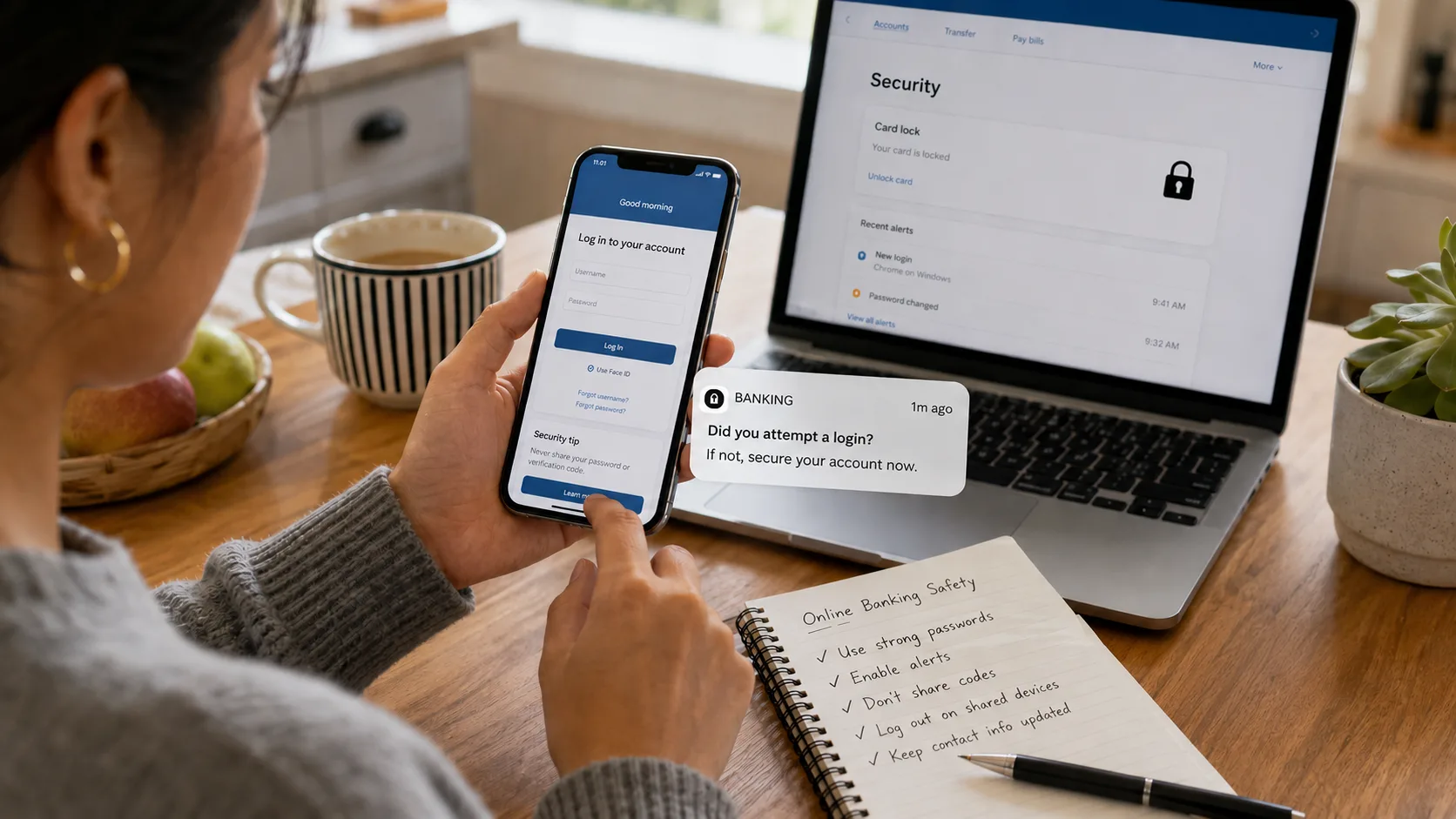
- Set up the bank app, alerts, and two-factor authentication.
- Save your routing number and account number for direct deposit.
- Read the fee schedule before using overdraft, wires, out-of-network ATMs, or international transfers.
Online Banking And Apps
Your bank app will become part of daily life. After opening the account:
- Create a strong password.
- Turn on two-factor authentication.
- Set low-balance and transaction alerts.
- Learn how to lock and unlock your debit card.
- Download your first account agreement or fee schedule.
- Confirm your address, email, and phone number are correct.
Direct Deposit For Salary
Direct deposit sends your paycheck electronically into your bank account. Employers usually ask for:
- Bank name.
- Routing number.
- Account number.
- Account type, usually checking.
- A voided check or direct deposit form if required.
Your first paycheck may take longer if payroll setup misses a deadline. Ask your employer when direct deposit starts and whether your first payment will be paper check, pay card, or direct deposit.
Direct deposit can also help you qualify for some account benefits or signup bonuses. Read the exact definition. Some banks require payroll or government benefits and do not count transfers from your own other bank account.
Common Mistakes
Frequently asked questions
Should I open checking or savings first?
Open checking first if you need daily spending, debit card use, rent payments, bills, and direct deposit. Add savings later when you want to separate emergency money or earn interest.
Can I open a U.S. bank account as an international student?
Is a debit card the same as a credit card?
No. A debit card spends money from your checking account. A credit card borrows money from the card issuer and can affect your credit report. Use a debit card for basic banking, then learn credit separately.
Do I need a bank branch?
Not always. You may be fine with an online bank if you do not deposit cash and you have free ATMs nearby. Choose a branch-based bank or credit union if you need in-person help, cash deposits, or campus access. For the comparison, read How to Choose a U.S. Bank Account.
Can a bank account help me build credit?
A checking account usually does not build credit by itself. It can help you manage money and prepare for credit products later. For credit building, read What Is a Credit Score?.
Is my money insured?
Money in eligible deposit accounts at FDIC-insured banks has FDIC insurance. Many credit union accounts have NCUA share insurance. Confirm insurance status before depositing money.
What To Do Next
- Check document requirements before applying.
- Apply online or visit a branch.
- Fund the account if required.
- Activate the debit card and alerts.
- Give your direct deposit information to your employer when you are ready.
- Protect your account login and never share one-time codes.
Related Guides
- Zelle, Venmo, Cash App, and Payment Apps
- How to Choose a U.S. Bank Account
- Sending and Receiving International Money Transfers
- Understanding Your First Paycheck
- Taxes for Newcomers
- First Week Checklist
- How to Get a Social Security Number in the U.S.
- Credit Checks
- What Is a Credit Score?
- How to Protect Your Personal Information
Sources
This guide uses official or primary sources for rules and government steps. Local rules may still vary. (Last checked: September 13, 2026)
- FDIC Deposit Insurance
- FDIC GetBanked
- CFPB: Know your overdraft options
- NCUA: How is a credit union different than a bank?
- IRS: Individual taxpayer identification number (ITIN)
- IRS: Instructions for Forms 1099-INT and 1099-OID